
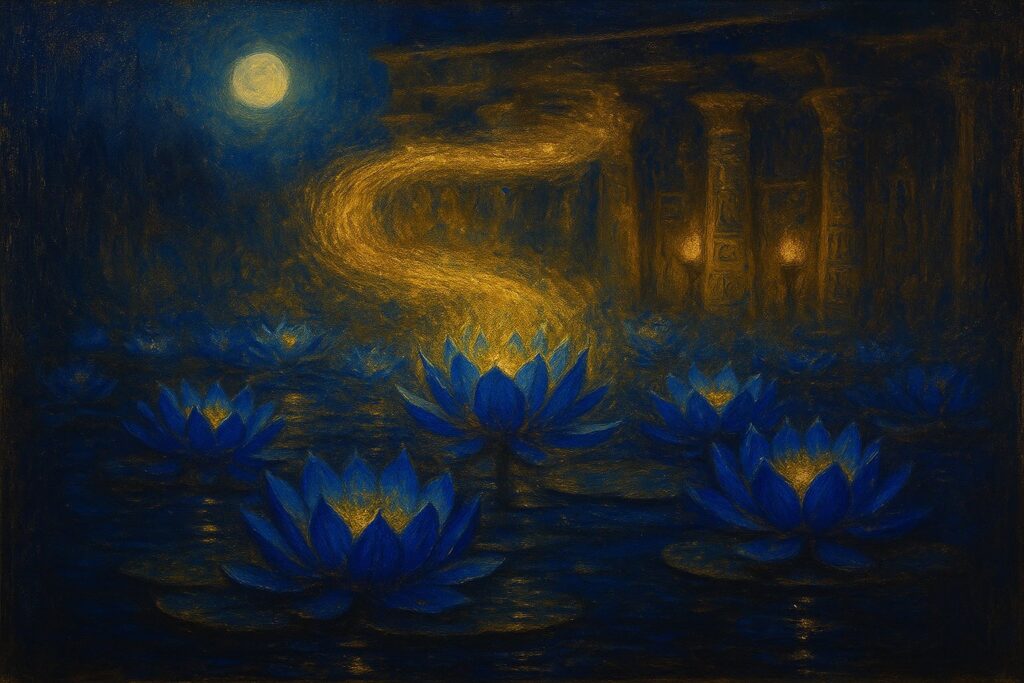
The Blue Lotus flower (Nymphaea caerulea) has fascinated humanity for thousands of years. People have always seen it as more than a beautiful blossom. For many cultures, it was a gateway between worlds. They used it in sacred rites, sensual ceremonies, and divination practices. From the temples of Egypt to the gardens of India, the Blue Lotus symbolized awakening, erotic mystery, and divine communion.
Blue Lotus in Ancient Egypt: The Flower of the Gods
No culture is more closely linked to the Blue Lotus than Ancient Egypt. Temple carvings, tomb paintings, and ritual objects often depict the flower in the hands of gods and pharaohs.
- Sacred Symbolism: Egyptians believed the Blue Lotus represented rebirth and the rising sun. They saw it open in the morning and close at night, a perfect symbol of renewal.
- Ritual Use: Priests and priestesses burned it as incense, steeped it into wine, and used it in baths. These practices helped them reach altered states and connect with divine realms.
- Sensual Practices: Couples offered the flower during feasts. Ancient art shows the Blue Lotus in scenes of intimacy, suggesting its use as an aphrodisiac.
- Divination: People drank Blue Lotus wine or tea before rituals. Many used it to induce dreams, visions, and spiritual insight.
When archaeologists opened Tutankhamun’s tomb, they found dried Blue Lotus petals inside. Clearly, Egyptians considered it essential for both life and the afterlife.
Blue Lotus in Greece and Rome
Trade brought Blue Lotus from Egypt into the Mediterranean. Greek and Roman cultures soon embraced its powers.
- Greek Mystery Traditions: Some historians believe initiates in mystery rites used Blue Lotus with wine to alter consciousness and commune with the gods.
- Aphrodisiac Symbol: The Greeks associated it with Aphrodite. Lovers and poets viewed the flower as a symbol of passion and erotic ecstasy.
Blue Lotus in India and Vedic Traditions
In India, the lotus has always been a sacred symbol in Hinduism and Buddhism. Blue Lotus held special significance.
- Symbol of Enlightenment: The lotus rises untouched from muddy waters. In the same way, the soul rises above worldly distractions.
- Tantric Practices: Healers added Blue Lotus to Ayurvedic and Tantric elixirs. These potions aimed to heighten sexual energy, balance chakras, and open higher states of awareness.
- Meditation and Ritual: Devotees used the flower in incense and offerings to Lakshmi and Saraswati. It represented purity, abundance, and divine love.
Blue Lotus in Africa Beyond Egypt
Communities across North and East Africa also honored the Blue Lotus.
- Healing and Trance Work: Shamans used it in smoking blends and teas. They believed it supported dream work, healing, and initiation.
- Connection to Ancestors: The flower bridged the living with the spirit world. Many sought visions of ancestors during rituals with Blue Lotus.
Blue Lotus in Modern Mysticism
Today, Blue Lotus enjoys a revival as a sacred plant ally. People use it in many ways:
- Meditation and Dream Work: The flower encourages lucid dreaming, deep relaxation, and spiritual insight.
- Sensuality and Tantra: Infused into teas, oils, and wines, it acts as a gentle aphrodisiac. It softens the body and heightens intimacy.
- Ritual Perfumery: Its intoxicating aroma appears in perfumes designed to open the heart and awaken higher consciousness.
Unlike stronger entheogens, Blue Lotus offers a soft doorway into expanded awareness. The experience is dreamlike, sensual, and harmonizing rather than overwhelming.
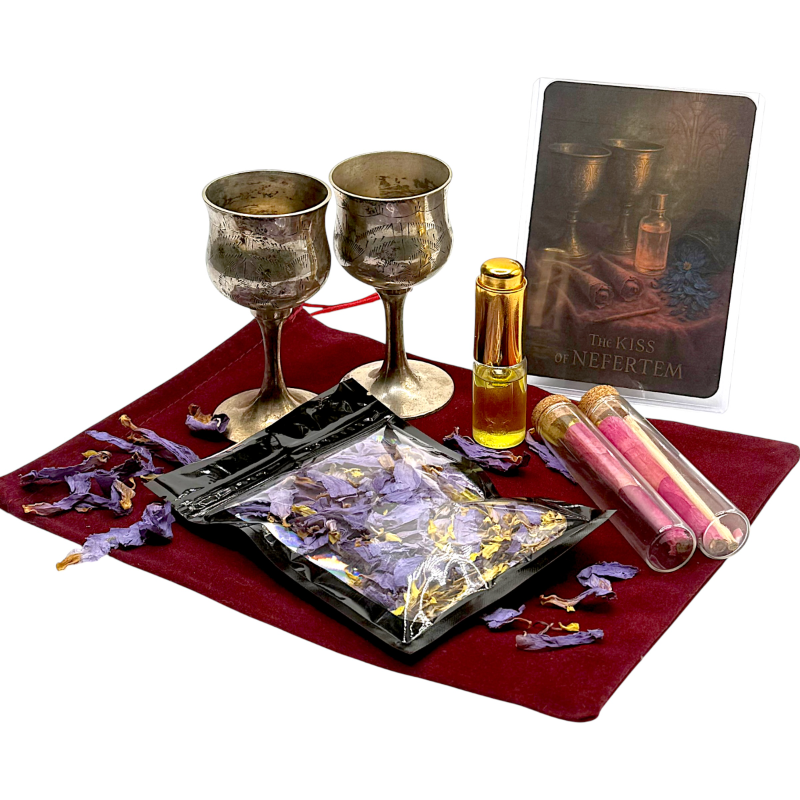
The Sacred Legacy of the Blue Lotus
From Egyptian temples to Tantric rituals, the Blue Lotus was never just a flower. It bridged the sensual with the divine and the physical with the spiritual.
This sacred blossom shows us that desire and awakening walk hand in hand. Pleasure leads to presence. Fragrance becomes a gateway to divinity.
The Blue Lotus reminds us to bloom fully with both body and soul.