
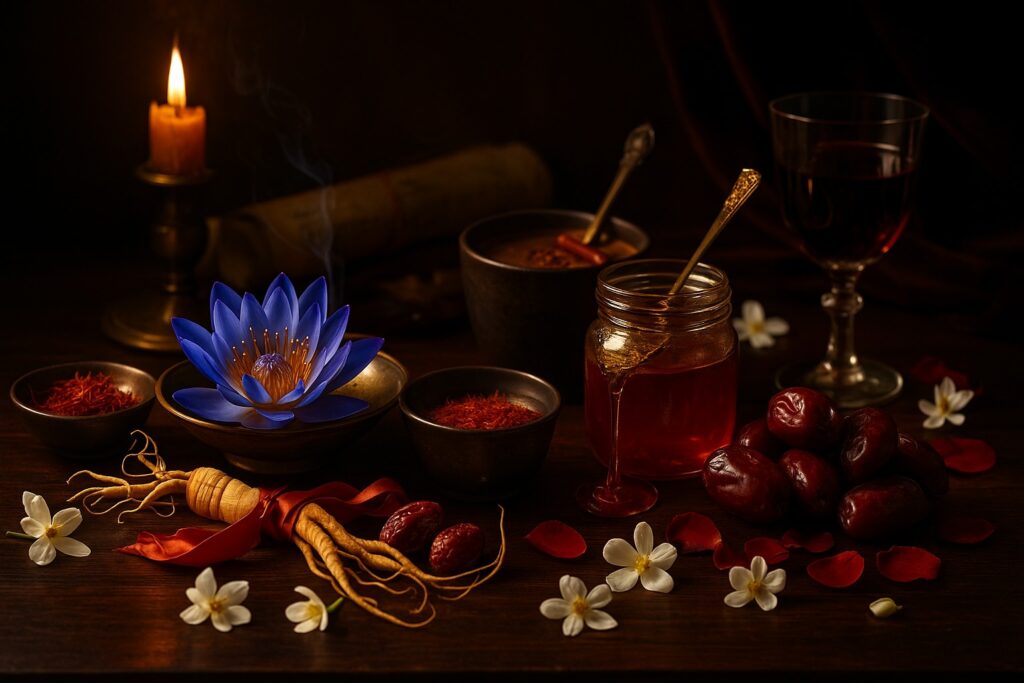
The Eternal Search for Desire
From the temples of Egypt to the tea houses of China, humans have always sought ways to heighten intimacy, awaken passion, and ignite the flame of desire. Aphrodisiacs foods, herbs, flowers, and elixirs believed to stir erotic energy have traveled with us through history.
But unlike many forgotten rituals, some of these ancient treasures are still alive today. They remain part of cultural traditions, wellness practices, and sensual rituals often backed now by science as much as myth.
In this guide, we’ll explore 10 of the most famous ancient aphrodisiacs still in use today. You’ll discover their histories, their powers, and how to experience them in your own life.
1. Blue Lotus (Egypt)
History: Revered as the “flower of the gods,” the Blue Lotus (Nymphaea caerulea) was used in ancient Egyptian ceremonies for love, pleasure, and ecstasy. Images of the lotus appear in tombs, temples, and love poems, symbolizing sensual awakening.
Effects: Mildly psychoactive, it induces relaxation, euphoria, and heightened sensuality. Often used in sacred rituals, it was believed to connect lovers to divine energy.
How to Try It Today: Blue Lotus is available as tea, tincture, or infused in massage oils. Our Nefertem’s Caress | 24K Gold Lotus Massage Oil channels this exact tradition into a luxurious sensual ritual.
2. Cacao (Mesoamerica)
History: The Aztecs and Maya called cacao “the food of the gods.” Montezuma was said to drink dozens of cups before visiting his lovers, believing it enhanced stamina and desire.
Effects: Rich in phenylethylamine and theobromine, cacao promotes mood, energy, and arousal. Its bitter, dark flavor awakens the senses.
How to Try It Today: Opt for ceremonial cacao blocks or cacao powders mixed with chili and cinnamon for a sensual ritual drink. Our Sacred Cacao Chili Elixir recipe (in The Erotic Alchemist) is a modern version rooted in this history.
3. Saffron (Persia & Greece)
History: Saffron threads appear in ancient Greek and Persian love poetry, associated with Aphrodite and the goddess Anahita. It was infused into wines, love cakes, and perfumes.
Effects: Studies suggest saffron enhances mood, reduces stress, and increases libido in both men and women. Its golden hue has long symbolized vitality and passion.
How to Try It Today: Steep a few threads in warm milk, honey, or tea as part of an evening love ritual. Saffron is also infused in our Rose & Saffron Elixir of the Night for a sensual Persian-inspired tonic.
4. Ashwagandha (India)
History: Rooted in Ayurveda, Ashwagandha has been used for over 3,000 years as a rasayana (rejuvenator). It is mentioned in ancient texts as a virility tonic and stress reducer, enhancing fertility and vitality.
Effects: Known to reduce cortisol and increase testosterone, Ashwagandha supports stamina, energy, and reproductive health making it one of the most researched aphrodisiacs today.
How to Try It Today: Mix the powdered root into warm milk with honey, saffron, and cardamom for a traditional Ayurvedic aphrodisiac drink a ritual detailed in our India chapter of The Erotic Alchemist.
5. Ginseng (China & Korea)
History: Chinese medicine has long praised Panax ginseng as a life force tonic. Taoist texts describe it as enhancing sexual vigor, stamina, and balance of yin and yang.
Effects: Modern research confirms ginseng’s role in improving circulation, energy, and sexual function. It’s considered a premier tonic for both men and women.
How to Try It Today: Brew ginseng tea or prepare it in a warming tonic with red dates and cinnamon. Our Taoist Red Date & Ginseng Potion is a direct inspiration from this tradition.
6. Honey (Worldwide)
History: Honey has been sacred across cultures, offered to Aphrodite, used in Indian madhu, and fermented into mead in Celtic lands. The term “honeymoon” itself comes from drinking honey wine to inspire fertility and passion.
Effects: Honey is rich in boron and nitric oxide precursors, which support energy and circulation. Symbolically, it represents sweetness and union.
How to Try It Today: Drizzle raw honey over fruits, add to elixirs, or incorporate it into sensual foreplay. Our Aphrodite’s Honey Love Cakes recipe brings this tradition into edible ritual.
7. Dates (Persia & Arabia)
History: Dates were celebrated in Middle Eastern love poetry and offered at weddings as fertility symbols. They appear in Sufi mysticism as fruits of divine sweetness and union.
Effects: High in natural sugars, amino acids, and minerals, dates are energizing and considered a natural stamina booster.
How to Try It Today: Blend dates with cardamom, saffron, and rosewater for a decadent aphrodisiac paste a staple in Persian love feasts.
8. Jasmine (China & India)
History: Called “moonlight of the grove,” jasmine has been woven into garlands for brides, burned as incense, and used as a perfume of seduction. Its intoxicating scent has always symbolized romance.
Effects: Aromatherapy studies show jasmine increases heart rate, mood, and arousal. In Tantric and Taoist rituals, jasmine flowers were associated with divine feminine energy.
How to Try It Today: Use jasmine essential oil in massage oils or diffuse during intimate evenings. Pair with ginseng or rose for a complete aphrodisiac blend.
9. Damiana (Mesoamerica)
History: Indigenous peoples of Mexico used damiana as a love potion herb. Spanish missionaries recorded its use as a libido booster in both men and women.
Effects: Mildly psychoactive, damiana is known for relaxation, mood enhancement, and increased sensitivity.
How to Try It Today: Brew damiana tea before intimacy, or mix it into smoking blends. It’s often combined with cacao for a deeply sensual aphrodisiac.
10. Red Wine (Ancient Mediterranean)
History: Wine has been central to love rituals since Dionysian feasts in Greece and Roman bacchanals. It will lower inhibition and has often been spiced with herbs like saffron and cinnamon for added erotic effect.
Effects: In moderation, wine relaxes the mind, increases blood flow, and enhances intimacy.
How to Try It Today: Share a glass of deep red wine before a romantic evening. Infuse with cinnamon sticks or cardamom pods for a historical aphrodisiac touch.
Final Thoughts: Desire is Timeless
What makes these 10 aphrodisiacs timeless is not only their ability to stir passion, but their power to connect us with history, ritual, and the essence of desire. From lotus flowers on the Nile to saffron threads in Persian feasts, the human search for love and intimacy is as old as civilization itself.
At Cupid’s Ero, we honor these traditions by crafting oils, elixirs, teas, and ebooks that bring the wisdom of the ancients into the rituals of today. Whether you’re seeking sensual enhancement, mystical romance, or historical curiosity these timeless aphrodisiacs are your key to unlocking desire.